
If you’re wondering, “Where is my tax refund?” you aren’t alone. This filing season, more than 830,000 taxpayers are facing unexpected IRS refund delays.
The culprit? A major policy shift as the IRS moves away from paper checks in favor of a fully digital payment system. If you still rely on mail-in checks, here is everything you need to know about why your money is held up and how to speed up the process.
Why is the IRS Delaying Paper Refund Checks?
The IRS is currently in the middle of a massive transition. Following an executive order signed in March 2025, federal agencies are now required to phase out paper-based payments in favor of digital methods.
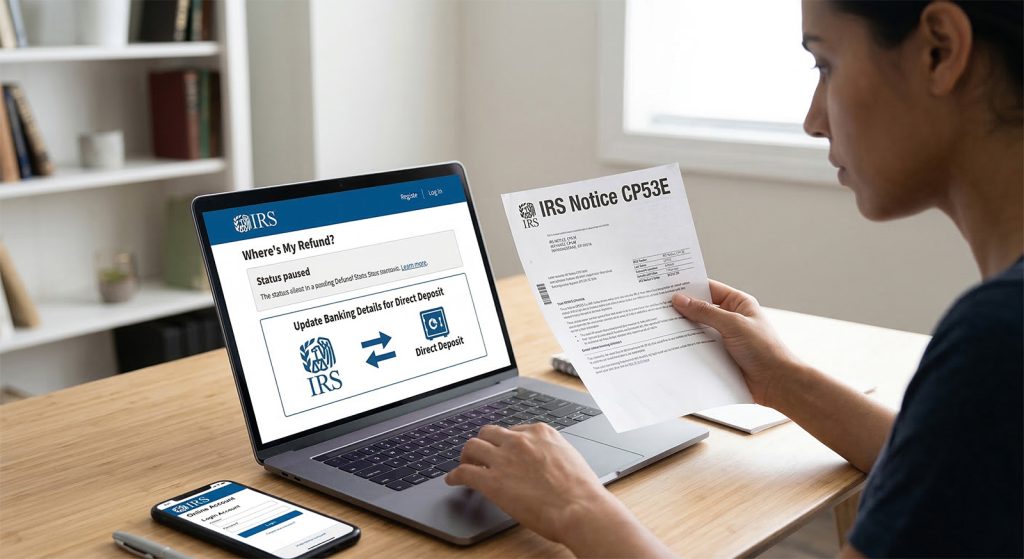
While 94% of taxpayers already use direct deposit, approximately 10 million Americans still receive paper checks. To bridge this gap, the IRS has begun issuing Notice CP53E, temporarily pausing refunds until taxpayers provide electronic banking information.
Understanding the CP53E Notice
If you received a CP53E notice in the mail, it means the IRS has flagged your account for a “digital-first” refund.
Key details of the CP53E process:
-
The Goal: The IRS wants your bank account details to issue a direct deposit instead of mailing a check.
-
The Deadline: You have 30 days from the date of the notice to update your banking information.
-
The Penalty for Inaction: If you do not provide bank details within 30 days, the IRS will eventually mail a paper check—but it could take an additional six weeks to arrive.
How to Fix Your Refund Delay (Step-by-Step)
If you are among the 830,000 taxpayers currently waiting, do not try to call the IRS. According to the House Ways and Means Committee, this issue cannot be resolved over the phone.
To get your refund faster, follow these steps:
-
Log into your IRS Online Account: Visit the official IRS.gov website and access your secure portal.
-
Submit Banking Details: Enter your routing and account numbers for a valid checking or savings account.
-
Monitor Your Status: After updating, your refund status should refresh within 2–5 days.
-
Use the “Where’s My Refund?” Tool: Keep an eye on the official tracker for your specific deposit date.
Who is Most Affected by This Change?
While the shift to digital is intended to increase efficiency, it creates hurdles for specific groups. You may be more likely to experience a delay if you fall into one of these categories:
-
Individuals without a traditional bank account (the “unbanked”).
-
Americans living abroad.
-
Victims of domestic abuse seeking financial privacy.
-
Taxpayers with religious restrictions regarding modern banking.
-
Individuals with disabilities who rely on physical mail.
The Bottom Line: Future-Proof Your Tax Refund
The era of the paper tax check is coming to an end. To avoid future IRS refund delays, the best strategy is to opt for direct deposit the moment you file your return. Not only is it more secure, but as this year’s delays prove, it is now the only way to ensure your money arrives on time.